
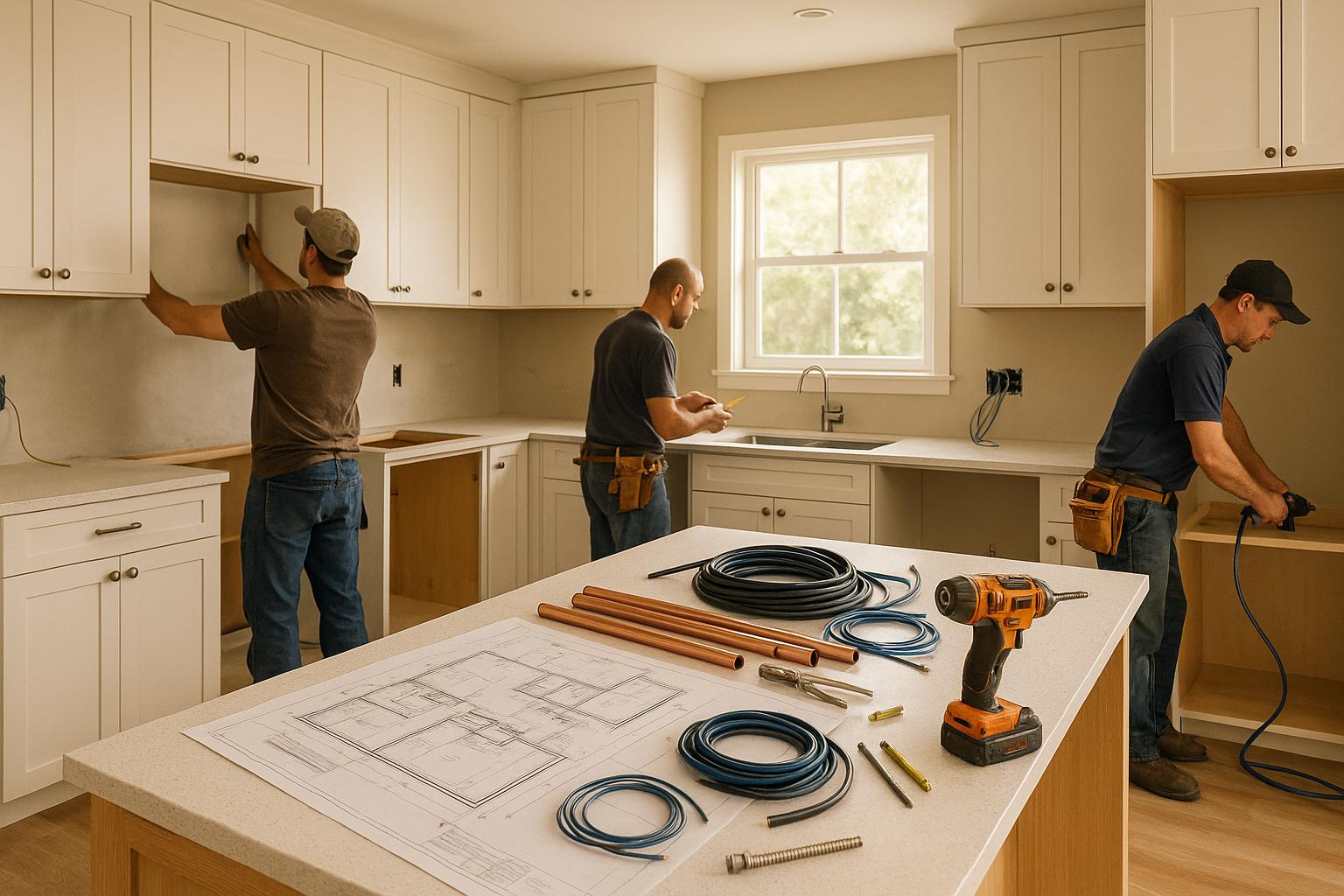
Renovating a kitchen can be an exciting opportunity to transform one of the most important spaces in your home. However, the journey from outdated to dream kitchen often comes with stress-inducing complexities. From coordinating multiple trades to managing timelines, homeowners can quickly find themselves overwhelmed. This guide simplifies the process by breaking down the essential steps and providing expert advice to help make your kitchen renovation as seamless as possible.
Whether you’re a Brooklyn homeowner updating a compact urban kitchen or planning an expansive remodel in a family home, this article offers an actionable roadmap to ensure every detail is accounted for.
Understanding the Critical Trades in a Kitchen Renovation
A successful kitchen renovation depends on numerous trades working harmoniously. Here’s a breakdown of the key professionals you’ll need to coordinate and the roles they play in your project:
1. Electricians
Electrical work is an integral part of any kitchen remodel. From installing lighting fixtures to ensuring appliances are properly wired, electricians are often required at multiple stages of the renovation. Their responsibilities include:
- Positioning sockets and switches: Ensure outlets are placed effectively for appliances like refrigerators, ovens, and microwaves.
- Setting up lighting: Plan for ambient and task lighting, such as pendant lights, recessed ceiling lights, or wall sconces.
- High-power appliances: Appliances like induction hobs or combination ovens require 32-amp cables. Electricians must be informed ahead of time to ensure your fuse board supports these requirements.
Timeline: Electrical work is completed in two phases:
- First Fix: During the "messy" stage, when wires are installed before plastering and flooring.
- Second Fix: After cabinetry and countertops are installed, final connections are made for appliances and lighting.
2. Plumbers
Plumbers are crucial if you’re adjusting the location of sinks, dishwashers, or gas appliances. Their tasks include:
- Moving or adding plumbing for sinks and water-based appliances.
- Ensuring proper drainage and water pressure.
- Handling gas lines for stovetops or ranges.
If relocating a sink to an island, plumbers will need to assess whether your flooring can accommodate routing new pipes. For minor adjustments, such as reconnecting existing plumbing, your kitchen fitter might be able to step in.
3. Flooring Specialists
Flooring plays a pivotal aesthetic and functional role in your kitchen. Decide whether the flooring will run wall-to-wall or stop under cabinetry. Key considerations include:
- Removing old flooring or laying a self-leveling compound.
- Choosing durable materials like tiles, hardwood, or luxury vinyl.
- Allowing adequate time for drying and curing before fitting cabinetry.
4. Tilers
Wall tiles are often installed after countertops to create a clean, polished look. The tiler’s work includes:
- Aligning tiles seamlessly with countertops and sockets.
- Ensuring proper placement of wall tiles for backsplashes and feature walls.
5. Kitchen Fitters
A skilled kitchen fitter brings the design to life, assembling cabinets, installing panels, and ensuring everything fits perfectly. Fitters also manage the placement of sinks, worktops, and appliances.
6. Worktop Specialists
Solid surfaces like quartz or granite require precise templating and installation:
- Templating: Occurs once base cabinets are installed to measure for custom countertops.
- Installation: Typically happens 7–10 days after templating.
Sequencing the Renovation: A Sample Timeline
To keep your project on track, it’s important to understand when each trade needs to step in. Below is an example timeline for a standard kitchen renovation:
- Week 1: Preparation and Demolition
- Remove the existing kitchen.
- Electricians and plumbers complete the first fix.
- Week 2: Structural and Surface Work
- Plaster walls and ceilings, if necessary.
- Install flooring (if it’s wall-to-wall).
- Week 3: Cabinet Installation
- Kitchen fitters install cabinets and base units.
- Worktop templating is completed.
- Week 4: Final Touches
- Install worktops and complete second fix for electrical and plumbing.
- Add wall tiles and install light fixtures.
- Fit appliances and conduct final inspections.
Pro Tips for a Smooth Kitchen Renovation
Even the best-laid plans can encounter hiccups. Here’s how to minimize stress and maintain momentum:
1. Conduct a Detailed Site Survey
Before work begins, ensure your builder or kitchen designer conducts a thorough site survey. This includes measuring the space, noting structural quirks, and identifying potential challenges.
2. Itemize Quotes
Request detailed quotes from builders and trades to avoid budget surprises. Itemized lists ensure transparency and help you track expenses for every aspect of the project.
3. Communicate Changes in Writing
If you make changes to materials, layouts, or finishes, confirm them via email to avoid miscommunication.
4. Plan for Delays
Custom features, such as bespoke countertops or cabinetry, can take longer to produce. Build buffer time into your schedule to account for these potential delays without disrupting other trades.
5. Be On-Site for Deliveries
Inspect deliveries for damage or missing pieces before installation begins. Flagging issues immediately allows suppliers to rectify them without delaying the project.
6. Prepare for Living Without a Kitchen
Renovations can leave you without a functioning kitchen for weeks. Consider setting up a temporary space with essential appliances or even rent a mobile kitchen pod for convenience.
7. Work with Trusted Professionals
Choose tradespeople and suppliers based on recommendations and reviews. Building trust with your team fosters open communication and ensures a more collaborative process.
8. Stay Organized
Create a checklist with key milestones and contacts for each phase of the project. This will help you quickly address questions or issues as they arise.
Key Takeaways
- Electrical and Plumbing Work: Plan positions for sockets, lighting, and appliances during the early stages. Major changes require first and second fixes.
- Sequencing is Key: Coordinate trades to prevent delays, particularly for flooring, tiling, and worktops.
- Communication Matters: Document all changes in writing and maintain open communication with tradespeople and designers.
- Be Prepared for Challenges: Expect unexpected delays or complications. Build flexibility into your timeline.
- Site Surveys Are Crucial: Ensure measurements and layouts are double-checked before ordering materials.
- Inspect Deliveries: Check for damages to avoid last-minute setbacks.
- Temporary Kitchens: Plan for how you’ll cook and eat during the renovation, especially if you’ll be without a working kitchen for weeks.
- Trust Your Team: Choose professionals with good reviews and experience in kitchen renovations to simplify the process.
Renovating a kitchen is a significant undertaking, but with the right planning and team in place, it doesn’t have to be overwhelming. By understanding the roles of each trade, sequencing tasks effectively, and communicating proactively, you can transform your kitchen into a space that’s both beautiful and functional. Remember, every detail matters – so take the time to plan thoroughly and enjoy the process of bringing your dream kitchen to life.
Source: "Kitchen Renovation Made Simple: Must-Have Trades & Timeline Tips" – Love Your Kitchen, YouTube, Aug 14, 2025 – https://www.youtube.com/watch?v=BpL23uj4RCM